
As homes, insurance, and utilities keep rising, homebuyers are increasingly interested in energy-efficient homes to lower the costs of home ownership. Thanks to ever-evolving technologies, it’s easier than ever to find new energy-efficient homes and to retrofit existing properties—if you can afford the costs involved.
Energy-efficient homes are more comfortable and durable, according to the Department of Energy, and homeowners can save a lot of money, depending on the features of the home. Of surveyed homebuyers, 90% prefer a home with features that lower energy costs, especially those already using smart home products (81%). Residential energy use accounts for 21% of energy use in the U.S., as well as 20% of greenhouse emissions.
Home sellers can also take note. The National Renewable Energy Laboratory says home values increase by $20 for every $1 saved on energy bills. The most common energy upgrades involve heating, cooling, windows, doors, and siding, but even something as simple as using LED lightbulbs can help produce savings. LED lighting products are 90% more efficient than incandescent lighting and last 35 to 50 times longer, and two to five times longer than fluorescent lighting.
According to GreenBuilderMedia.com, accelerated climate-change-driven disasters are creating a sense of urgency among consumers and builders—as well as local, state, and federal governments to do something positive to bring down greenhouse gases and make energy efficiency a greater priority in order to save money as well as the planet. In a survey, Green Builder asked consumers to rank the most important energy upgrades; among the top items were upgraded windows, insulation, roofs, smart thermostats, solar energy systems, efficient appliances and lighting, heat pump HVACs, and heat pump water heaters.
That’s not to say that homebuyers tour homes with a list of energy product requirements, but it behooves builders, home sellers, and real estate professionals to make a home’s energy-efficient appliances, systems, and upgrades front and center in their marketing.
For new homes in 2025, centralized control systems let buyers manage all their smart devices from a single interface. Voice-activated assistants with advanced language processing make these systems easy to use. Homeowners can adjust appliances and settings with simple voice commands.
With most new appliances (and even some furnishings) now equipped with smart features, owners can also take advantage of energy management tools that shift usage to off-peak hours, lowering both energy costs and carbon footprints.
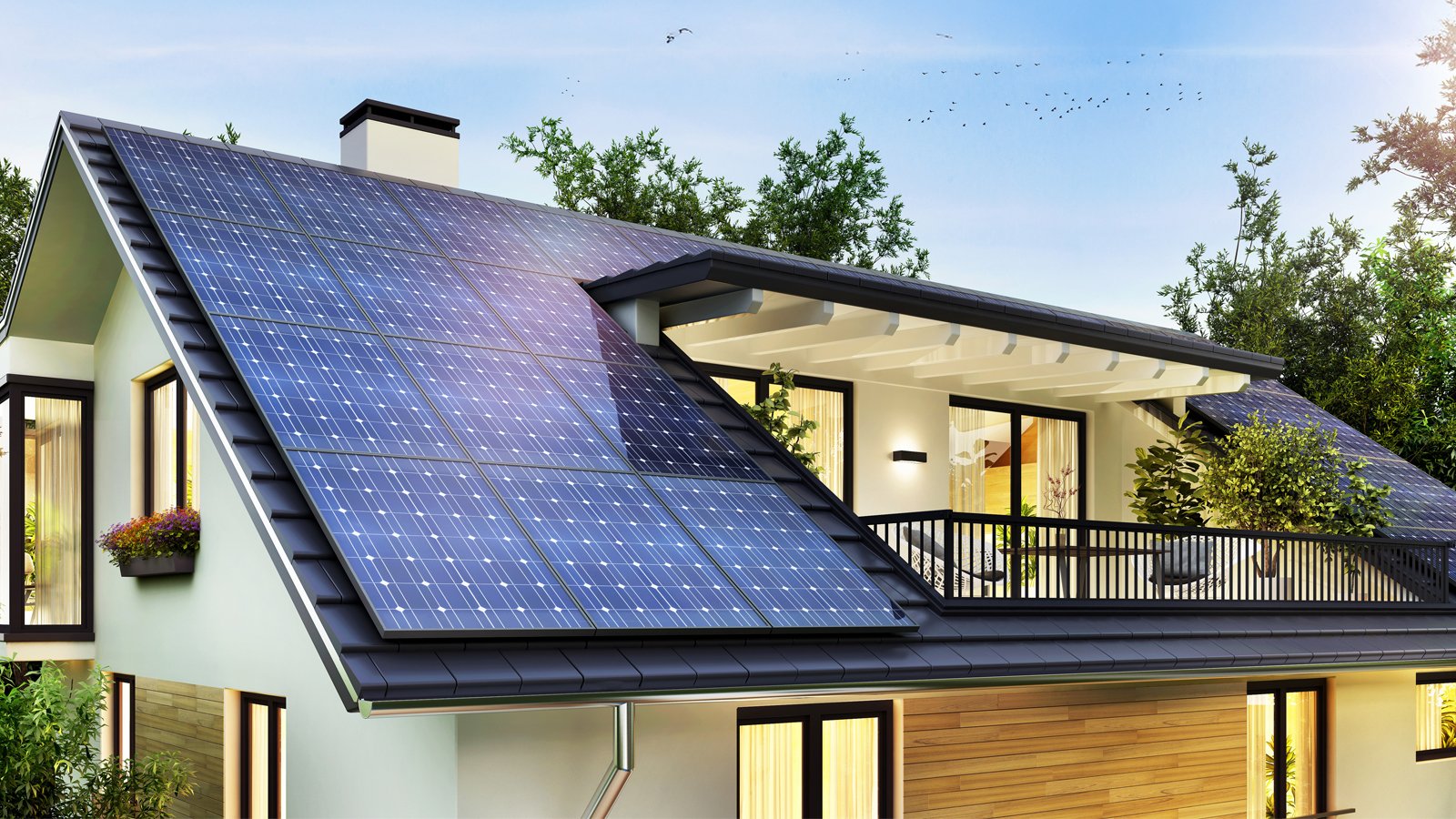
Renewable energy via solar roofs with on-site battery storage is helping to take homes to net-zero, which simply means homes can produce as much energy as they consume. Instead of ugly, top-heavy panels, the sun-capturing technologies are embedded in sleek solar glass and steel roof tiles. As with previous panels, homeowners have the option to sell unused energy back to their local power grid or store it in a compact on-site battery storage that can power the home during grid outages. Home sellers with solar roofs net 4.1% more than competitors without solar.
Homebuyers demanding the latest energy-saving technologies are likely to drive electric vehicles, so builders are beginning to include built-in electric vehicle chargers in the garage, making it convenient for homeowners to switch to electric transportation.
Central heat and air systems replaced bulky window units for whole-house comfort, but the price of new units has increased much more than other systems for the home. Replacing a unit without ductwork costs between $3,000 and $6,000 for a unit that lasts around 15 years. With new ductwork, costs are roughly double that $7,000 to $15,000.
For home sellers and homebuyers looking at expenses, replacing central heat and air with heat pumps is a smart move. Heat pumps are all-in-one heating and cooling systems that are more efficient and cheaper to operate. Unlike HVACs, heat pumps can reverse to cool air in the summer and warm air in the winter. Among the many benefits is that heat pumps can use existing ductwork and electrical infrastructure. They’re easier to maintain, save money on energy bills, operate far more efficiently than oil, gas, or electrical heating, produce better air quality, and make the home more comfortable year-round.
To help consumers and businesses make the transition to energy-saving systems and appliances easier and more affordable, the U.S. Environmental Protection Agency (EPA) founded ENERGY STAR® in 1992 as a voluntary product labeling program for energy-saving products that meet EPA specifications. Consumers can receive incentives, rebates, and tax credits when they purchase an Energy Star-labeled product. These labels can also help home sellers communicate efficiency and cost savings to homebuyers, helping them sell their homes faster.
For both new and existing homes (previously owned and occupied), Green Builder surveyed consumers to learn which energy-efficient upgrades were most important to them:
- Upgraded windows – Heating and cooling through windows uses 25-30% of a home’s energy. Energy Star-certified windows can save an average of 12% on energy bills.
- Upgraded insulation – Proper insulation can save you between 10-50% on energy bills.
- Upgraded roof – Solar panels on the average-sized home can save between $20,000 and $75,000 in electricity costs.
- Smart thermostat – According to Consumer Reports, a smart thermostat can save homeowners about 8% in electricity costs.
- Energy-efficient appliances – Energy Star-certified appliances use about 10 to 30% less energy than equivalent products.
- Efficient lighting – Lighting accounts for about 15% of electricity use. The average home can save about $225 annually simply by using LED lighting.
- Heat pump HVAC – Energy Star-certified heat and cooling equipment can save between 10–30% in energy costs, but higher-efficiency heat pumps can reduce energy use by as much as 50%.
- Heat pump water heater – Energy Star-certified heat pump water heaters can be two to three times more efficient than electrical water heaters.
All of these energy-saving products and many more are listed on EnergyStar.gov. Each product will have its own allowance for rebates and tax credits. Currently, federal income tax credits will be available through 2032, but are limited to primary homes within the U.S., improvements made for that year’s tax return, and a ceiling of $3,200 in tax credits taken annually.